
Breuken vermenigvuldigen met een driehoeksmodel
Leer breuken vermenigvuldigen met een driehoeksmodel, en zie waarom de helft van twee derde gelijk is aan een derde en hoe de snelle regel werkt.
Leerbronnen
Deze inhoud maakt deel uit van de open leerbibliotheek van Mathos AI. Ontworpen om studenten te helpen complexe wiskundige problemen te visualiseren en te begrijpen.


Problem
Use a triangle model to multiply fractions and find:
Step 1: Start with One Whole
The complete triangle represents whole. Every fraction in the model will be compared with this original whole triangle.
Step 2: Shade the First Fraction
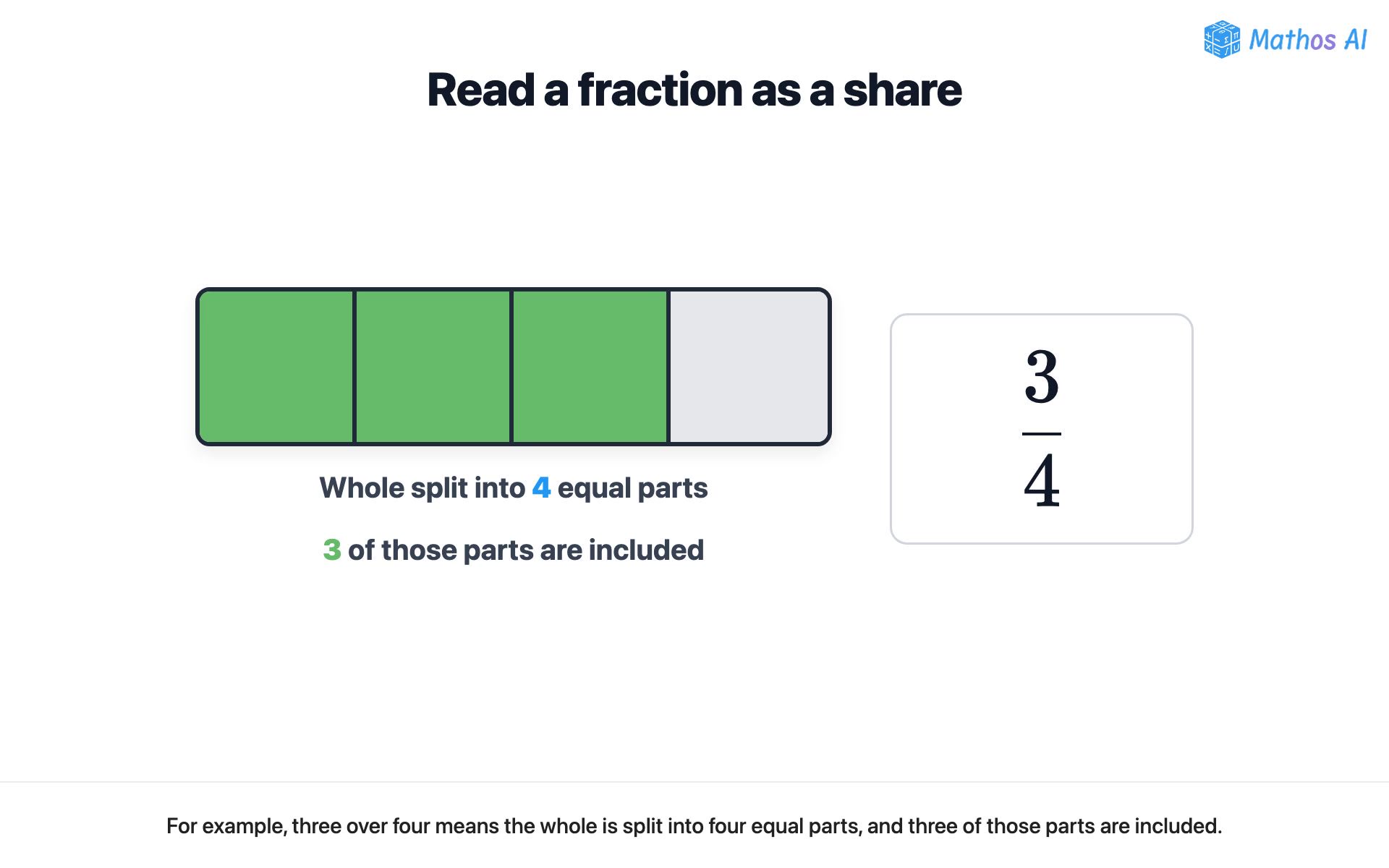
Divide the triangle into equal parts. Shade of those parts.
The shaded region represents:
of the triangle.
Step 3: Take a Fraction of the Shaded Part
Now take of the shaded region.
Since the shaded region is of the whole triangle, taking half of it leaves:
of the original whole triangle.
Step 4: Connect the Drawing to Multiplication
Taking of means multiplying:
The triangle model shows that the result is:
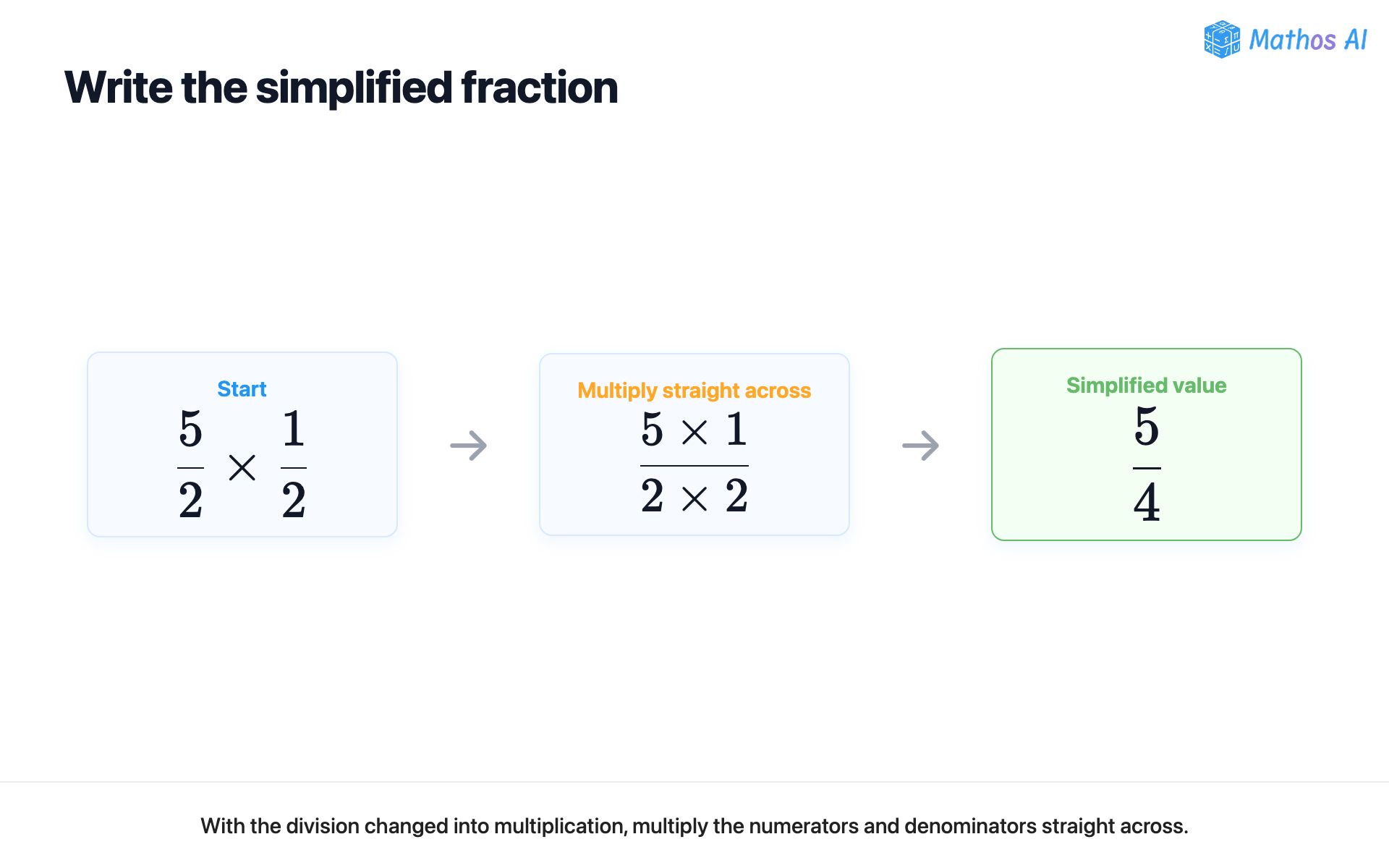
Step 5: Use the Fraction Rule
To multiply fractions, multiply the numerators and multiply the denominators:
Then simplify:
Step 6: State the Final Answer
Both the triangle model and the fraction multiplication rule give the same result:
Meer video's
© 2026 Mathos. Alle rechten voorbehouden